Practical guide / sample v1.0
Digital PDF or scan? Check before choosing a converter
Two PDFs can look almost identical and need different extraction workflows. A digital document may contain readable text and table lines. A scan may contain only a picture of the page. Text extraction alone cannot turn that picture into usable rows.
Our sample makes the distinction visible. We created a six-row digital purchasing table, then turned the same page into an image-only PDF. Both the pdfplumber table workflow and the pdftotext text workflow recovered all 36 data cells from the digital version. Both recovered zero rows from the scan.
That does not make the tools broken. The scan contained no text characters to extract. An OCR step was needed.
We then tried local Tesseract OCR with the table's cell positions supplied. It returned all six rows, but only 31 of 36 cells matched exactly. Five record IDs confused zero with the letter O. The quantities, unit prices and totals all matched.
Before processing a batch:
- Try selecting and copying a short piece of text. This is a useful clue, not a complete diagnosis.
- Check more than one page. A document may mix text pages and scanned pages.
- Run a small extraction and inspect actual output.
- If OCR is needed, validate IDs and dates as well as amounts.
The sample uses clean invented data and a known fixed layout. It does not establish a general OCR accuracy rate. PDF.co, Adobe Acrobat and other paid converters have not been tested here.
Same page appearance, different data underneath
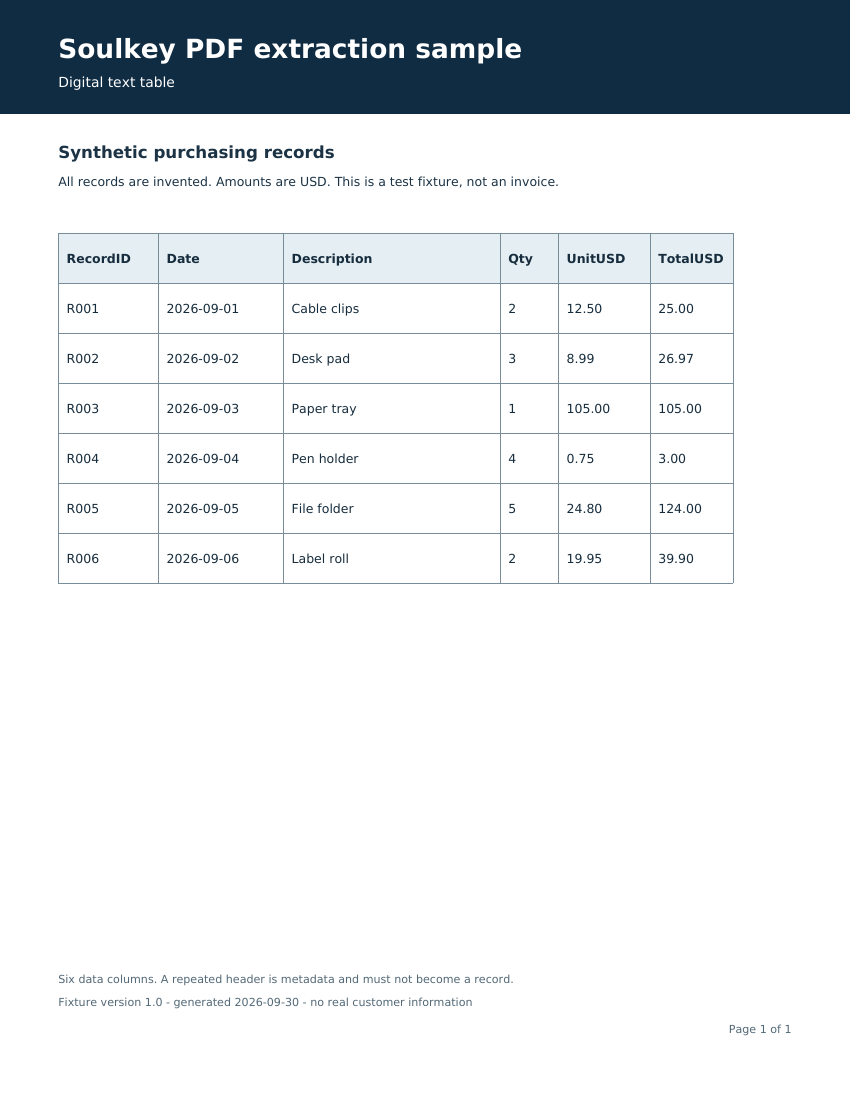
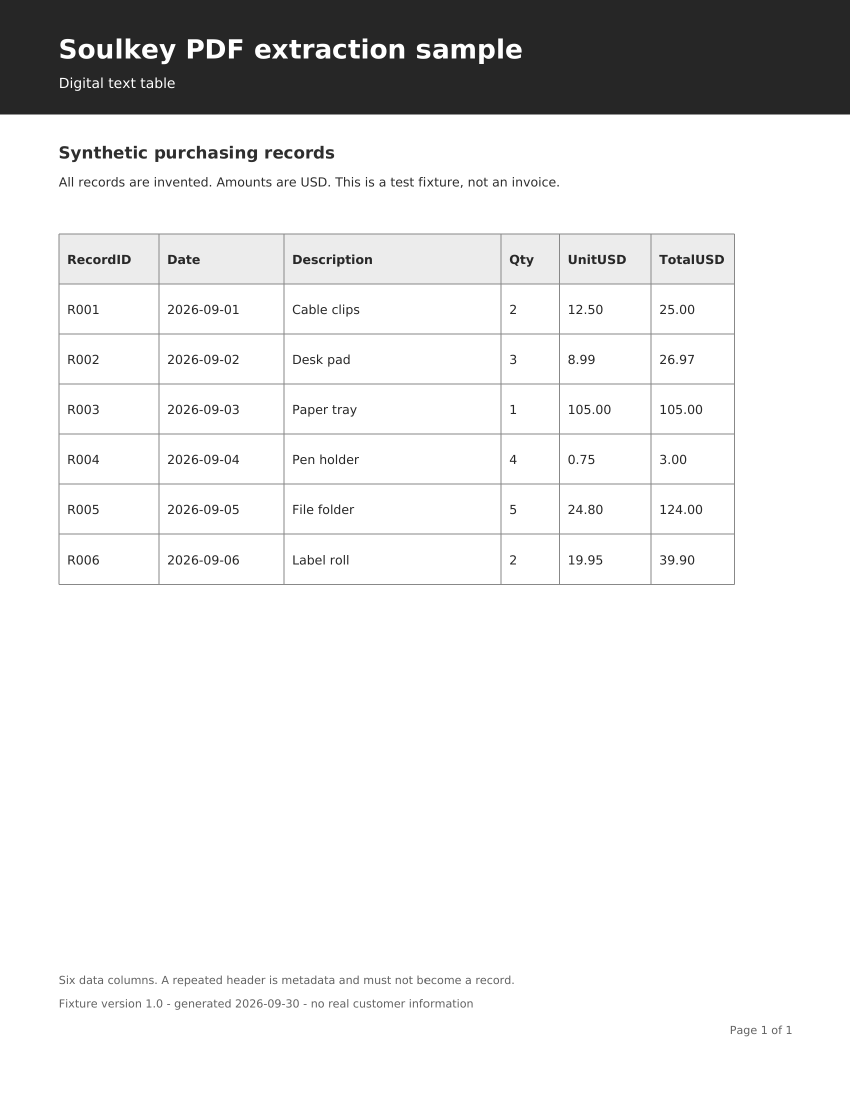
The source pages look nearly identical. The extraction results do not. Test for selectable text, inspect the output, and check mixed-page documents page by page.
Scope reminder: these are three clean synthetic fixtures. The OCR test used known cell positions. No paid converter was tested, and no result here is a general accuracy or vendor-ranking claim.
Digital fixture · Scan fixture · Expected CSV · Full methodology